Out of the Darkness and Into the Light — Bekele Shanko (CRU Legacy)
I grew up in rural Ethiopia, in a world ruled by fear. From the time I was a child, my family believed that spirits controlled everything — sickness, protection, crops, danger. Every decision we made was shaped by the need to appease those spirits. If something went wrong, we assumed we had angered them. If something went right, we believed they had been satisfied.
That was the atmosphere of my childhood. Darkness wasn’t just around me — it lived inside me. I learned to fear the night, fear the future, fear the unseen. I didn’t know any other way to live.
The Untold Story of Black Hawk Down — Jeff Struecker
I never expected my life to become the backdrop for a major motion picture. When people talk about Black Hawk Down, they think of the explosions, the chaos, the danger. They think of Mogadishu, Rangers, helicopters falling from the sky. But for me, the most important part of that day wasn’t the battle itself — it was what God did inside my heart while the battle raged around me. It was the moment when fear met faith, and faith proved stronger.
I was a young Ranger then, trained to run toward danger, not away from it. Courage was supposed to be second nature. But nothing prepares you for the reality of combat — the sounds, the smells, the uncertainty, the knowledge that every step could be your last. Mogadishu was unlike anything I had ever experienced. It was intense, violent, and unpredictable. And in the middle of it, God gave me a perspective that changed the rest of my life.
Journey of Tithing to Radical Generosity — John and Betty Addink
When Betty and I were first married, our finances were anything but secure. Through our college years and several failed business ventures, we made a simple commitment: we would give the first 10% of our income to the Lord. We never viewed it as losing money. It was our way of acknowledging that everything we had belonged to Him.
In our thirties, God began to bless our sod farming business in ways we never imagined. As our income increased, so did our opportunity to give. Yet, like many business owners, I believed the best use of extra income was to invest it back into new ventures. After putting a substantial amount of money into two large business failures, I came to a sobering realization. The money we had lost could have been invested in eternity. Businesses can fail, but what is given to God’s kingdom never loses its value.

We’re Letting You Go - Fired — Roger Randall
I still remember the day it happened. The air felt normal, the hallway looked the same, and nothing warned me that my life was about to split open. I walked into the office thinking about the next project, the next meeting, the next thing I needed to accomplish. I had no idea that within minutes, everything I thought I had built—everything I thought I was—would be stripped away. They sat me down. No small talk. No gentle lead‑in. Just a sentence that hit like a hammer: “Roger, we’re letting you go.”
I felt the words before I understood them. Fired. Me. The guy who worked harder than anyone. The guy who delivered results. The guy who thought he was indispensable. I sat there stunned, trying to keep my face from collapsing. My mind raced—What did I do wrong? Why didn’t I see this coming? How could they do this to me? But underneath all that noise, something deeper stirred. Something I didn’t want to acknowledge. Something I had been ignoring for a long time. Pride.
I’m Not Enough! God Says Otherwise. — Roger Randall
I want to tell you a story I never thought I’d share publicly. It’s not dramatic in the way some testimonies are. There’s no lightning bolt, no booming voice from heaven, no moment where the sky split open. It’s quieter than that. Simpler. But it changed everything about how I see myself — and how I see God.
For most of my life, I carried this belief deep inside me: I’m not enough. Not old enough. Not wise enough. Not spiritual enough. Not strong enough. Just… not enough. And I didn’t say that out loud. I didn’t even admit it to myself. But it was there, shaping the way I walked into rooms, the way I avoided opportunities, the way I quietly hoped God would use someone else — someone more qualified, more confident, more impressive.
Pain On Trial — Roger Randall
If you had asked me early in my ministry what God used most to shape a person, I would have given you a list: Scripture, discipleship, community, obedience, mission. All true. All essential. But I would have left out the one tool God has used again and again to carve His character into my life—pain.
I didn’t understand that at first. I didn’t want to understand it. Pain felt like an intruder, an interruption, something to endure and move past as quickly as possible. But over the years—through leadership, through loss, through disappointment, through the quiet battles no one sees—God began to whisper a truth I had never considered: “Roger, pain is one of the trials of life I use to show you that you can trust Me to get you through it.”

If This Is the Top of the Mountain, I’ve Climbed the Wrong One — Ash Metry
Some stories don’t begin with a miracle. They begin with a slow, steady awakening — the kind that happens when God gently unsettles the life you thought you wanted so He can lead you into the life you were made for. That’s what happened to me. My journey winds from Egypt to America, from corporate success to holy discontent, and ultimately from building my own kingdom to joining God’s. It’s a story about surrender, obedience, and discovering that the top of the world isn’t the same as the center of God’s will. It’s about learning to follow Jesus into a better story — one step of faith at a time.
I’m a husband, a father, and a software entrepreneur. But the most important thing about me — and about our family — is that we belong to Jesus.
Part 4: The Voice That Reached the World — Morgan Jackson
When Mary and I packed our belongings and moved to Albuquerque, we weren’t stepping into a thriving ministry. We were stepping into a crisis. Faith Comes By Hearing — the ministry my father had poured his life into — was on the brink of collapse. Staff had been cut from thirty‑five to twelve. Paychecks couldn’t be cashed. The building felt hollow, like a place where hope used to live. But God had spoken. And when God speaks, you obey.
I walked into that office on my first day with no idea what I was supposed to do. I wasn’t a pastor. I wasn’t a theologian. I was a worker — a man who knew how to build, organize, and persevere. So, I did the only thing I knew: I worked. I cleaned. I fixed things. I listened. I prayed. And slowly, God began to reveal why He had brought me home.

Part 3: The Marriage God Arranged Without Our Permission — Morgan Jackson
I never expected God to write my love story. Honestly, I didn’t want Him to. I had watched my parents follow God into a school bus, into deserts, into places that made no sense. I admired their obedience, but when it came to marriage, I wanted something normal — something I could choose, something I could control. But God had other plans.
I was twenty years old, living in Flagstaff, running a small ministry and two growing businesses. I had dated a young woman I fully expected to marry. She was kind, godly, and everything made sense on paper. I wasn’t asking God for direction. I thought I already knew the direction. Then one night, at a banquet, everything changed. I was sitting at a table with the woman I thought I would marry when I sensed the Lord speak — not audibly, but unmistakably, the way only the Holy Spirit can. He said, “That woman will mold perfectly with your spirit”. I looked up, confused. He wasn’t talking about the woman beside me. He was talking about someone across the room — Mary, a young woman who I had been discipling. I respected her. I admired her faith. But I had never once thought of her romantically. Not once. I tried to shake it off. Surely, I had misheard. Surely, God wouldn’t interrupt my plans like that. Surely, He wouldn’t ask me to walk away from a relationship I had invested in. But the whisper stayed.
Part 2: God Doesn’t Steer a Parked Car — Morgan Jackson
By the time I reached my teenage years, the bus had shaped me in ways I didn’t fully understand. I had seen God provide. I had watched Him speak. I had learned that obedience wasn’t optional — it was life. But knowing those things and living them as a young man were two different battles. I wasn’t the loud kid. I wasn’t the natural leader. I wasn’t the one to which people looked. I was quiet, small, and observant — the kind of kid who worked hard because he didn’t know what else to do. While other boys were chasing popularity, I was chasing responsibility. I didn’t have many friends, but I had a growing sense that God was watching me, shaping me, preparing me. I just didn’t know for what.
When we finally settled in Albuquerque after years on the road, I felt like a stranger in my own country. I had lived among the Navajo, where respect was quiet and strength was measured in endurance. Now I was in a world of lockers, football games, and teenage bravado. I didn’t fit. But I worked. That was the one thing I knew how to do. I took any job I could find — mowing lawns, hauling trash, cleaning, fixing things. I wasn’t trying to build a résumé. I was trying to build a life. And somewhere in the middle of all that work, God was building something in me: perseverance, humility, and a willingness to do whatever was in front of me with all my heart.
I Grew Up in a School Bus — Morgan Jackson
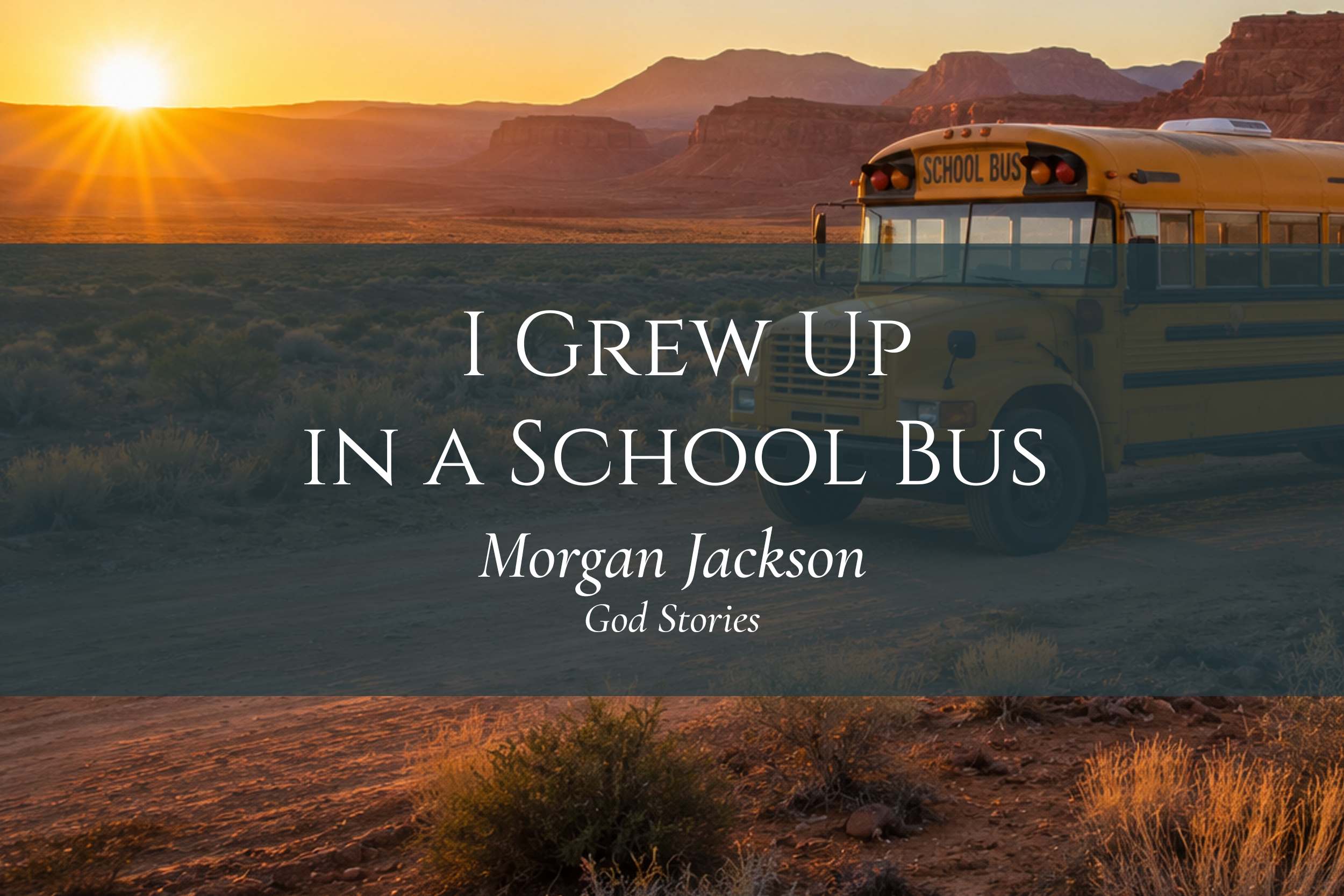
I grew up in the mountains of Southern California, in a little place called Upper Ojai — the kind of childhood most boys dream about. Bare feet, fishing holes, BB guns, forts in the woods. It felt simple and safe, the kind of life where you think the world will always stay that way. But God had a different kind of classroom in mind for me, one that would shape everything I would one day believe about Him.
My father had come to Christ in his twenties after a childhood spent in foster homes and orphanages. He didn’t grow up with stability or tenderness, but when he met Jesus, something ignited in him. He became a man who believed the Bible the way a drowning man believes in air. He didn’t just read Scripture — he tried it. Tested it. Lived it.
God's Fingerprints on America's Birth
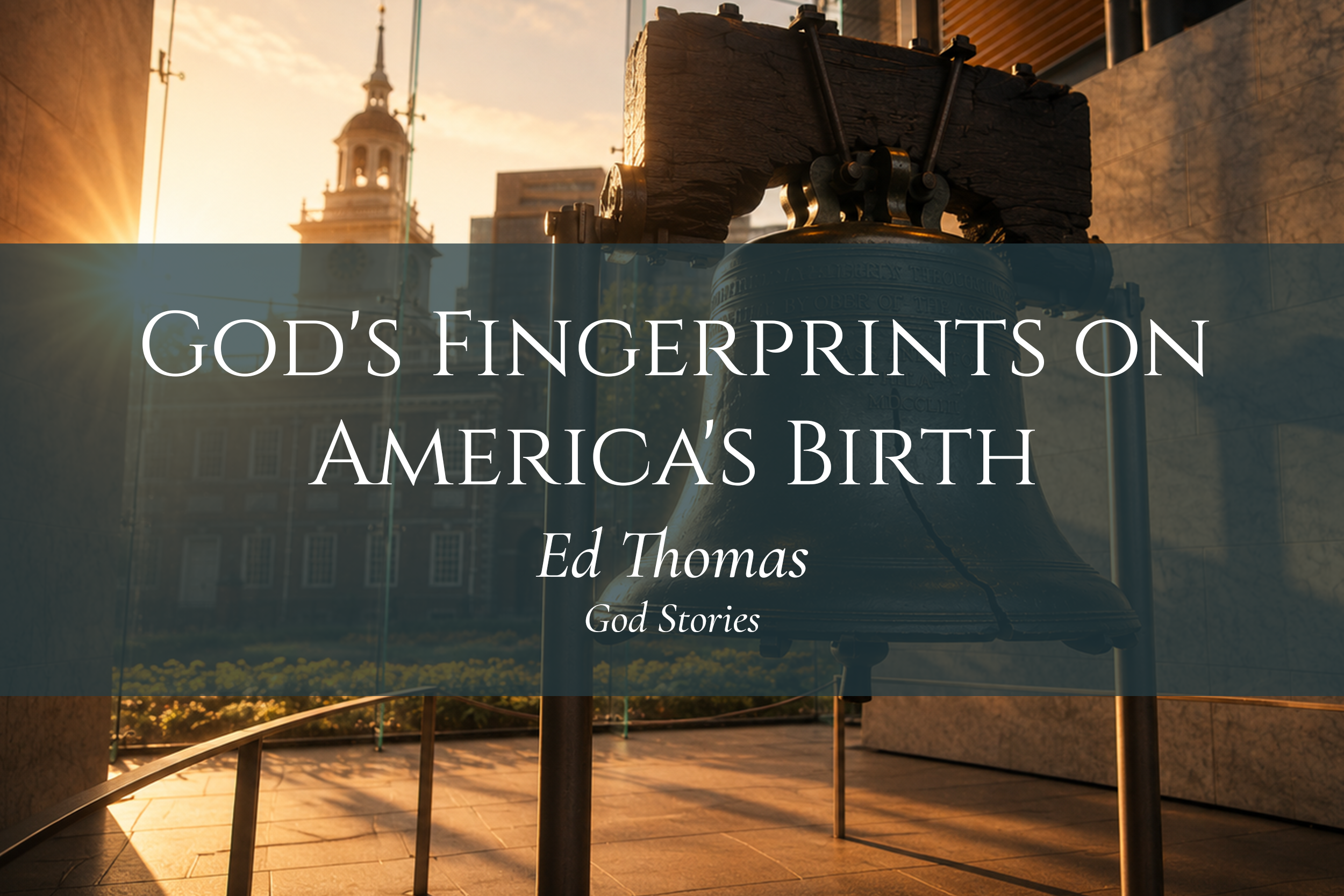
On July 4th, Americans pause to celebrate more than the birth of a nation—we celebrate the unmistakable fingerprints of God woven through our history. Independence Day reminds us not only of political freedom but also of the deeper spiritual freedom offered through faith in Christ. When we look closely at the events surrounding America’s founding, we see a story marked by courage, sacrifice, and a profound sense of divine providence.
When the Continental Congress declared independence in Philadelphia, the ringing of the Liberty Bell carried more than patriotic symbolism. Its inscription came straight from Scripture: “Proclaim liberty throughout all the land unto all the inhabitants thereof” (Leviticus 25:10). That verse, originally tied to the Year of Jubilee—a time of release, restoration, and freedom—became a prophetic banner over a nation fighting to break free from tyranny. Early Americans often compared their struggle to the Israelites’ exodus from Egypt, believing their cause echoed God’s deliverance of His people from oppression.
I Almost Got Killed — Dave Collins
Remembering my life in the past and my life today, I stand amazed not only that this little boy survived multiple near-death experiences but that to this day this body still functions well. I have seen and experienced unbelievable beauty and adventure and after multiple years of such fullness still have the physical capacity to participate with younger men in life’s adventures.
The Story I Didn’t Know I Was Living — Wade Hopkins
My name is Wade Hopkins, and for the last 30 years I’ve had the privilege of serving with the Fellowship of Christian Athletes in and around the Houston area. When I look back, I’m still amazed at what God has allowed me to witness. Over the last three years alone, our team has focused intentionally on inner‑city Houston, and the results have been nothing short of miraculous. More than 5,000 young people have heard the gospel. 1,292 have made decisions to follow Jesus Christ. 2,946 Bibles have been placed directly into the hands of students who may have never owned one. These aren’t just numbers to me—they’re stories, faces, and eternal destinies. And all of it is evidence of what God can do through a heart fully surrendered to Him.
But my story doesn’t begin in ministry. It begins in Pasadena—South Houston—where I grew up as a fatherless kid with one dream: to play football. That dream was everything to me. I wanted the NFL. I wanted the lights, the roar of the crowd, the identity that came with being “somebody.” But growing up without a father meant I didn’t have many opportunities. My dad left when I was young, and that absence could have easily shaped my life in all the wrong ways.
When God Multiplies What You Surrender — David & Carol Richards
Throughout our married life (61 years at this writing), we have striven to give at least ten percent (10%) of our income to our local church. I would not represent that we have always reached this goal. Several years ago, our church initiated the largest fund raiser in its history to build a new sanctuary and children’s building-an amount more than twice what had ever been raised before in previous fundraisers in total. Quite an undertaking and step of faith.
At that time, I had recently read Lt. Governor of Texas, Dan Patrick’s book on his spiritual journey, which included his thoughts on giving. For a fund raiser in his church, he had pledged ten percent (10%) of his financial net worth for a building project, just to make sure he hadn’t cheated God, and God had been faithful to him to enable him meet this pledge over a three-year period.
The Prayer That God Answered Bigger Than We Could Imagine — Dave Hannah
When Dave Hannah looks back over his life, he sees a pattern he never recognized in the moment—God quietly arranging details, redirecting disappointments, and preparing a story far larger than anything he or his friends could have dreamed. One of the clearest examples began during his junior year at Oklahoma State, shortly after he surrendered his life to Christ “in a really serious way,” as he put it. God began changing him immediately. He joined the Southern Baptist Student Union, surrounded himself with other believers on the football team, and together they came up with a bold idea: host a three‑night evangelistic event and invite all 10,000 students on campus.
Dave was a brand‑new Christian. He had seen Billy Graham fill stadiums and assumed it was simple—“I thought he just said, ‘Y’all come,’ and the Lord brought everybody.” He had no idea how much work went into something like that. But he believed every student would want to know God personally, so he and a few others met with the OSU President to request Gallagher Hall, the largest venue on campus that could seat 10,000.
The Year God Took the Bat Out of My Hands - Part 4 — Mike Zatopek
Driving back to Austin after giving my life to Christ, I felt like a different man. For the first time in years, the anger and bitterness I had carried no longer owned me. That freedom changed everything—including my baseball career. After a mediocre fall, something clicked. In our Fall World Series I hit over .400 with a couple of home runs and settled into center field, where I would play that spring. Early in the season I platooned across the outfield and was the designated hitter, but right before conference play Coach Gus told me I’d earned a starting spot. A knee injury to our center fielder pushed me into the lineup full‑time, and I started strong against Baylor. By mid‑conference I was leading the Southwest Conference (SWC) in hitting and felt on top of the world.
Then a low‑grade fever slowed me down, and I spent the final week of the season in the hospital having a cyst removed. I listened on the radio as my teammates clinched the SWC Championship. Even so, I was humbled to be named First Team All‑SWC and First Team NCAA All‑District VI. I returned for the playoffs, made the All‑Region Team, and helped us reach the championship game of the NCAA Central Region.
The Day God Turned Hatred Into Love - Part 3 — Mike Zatopek
The summer before I left for the University of Texas was supposed to be one of the most exciting seasons of my life. Friends encouraged me, opportunities were opening, and I was playing some of the best baseball I’d ever played. But while everything on the outside looked promising, my home life was unraveling. My father’s drinking and anger grew worse, and as my departure for Austin approached, so did his hostility. He continually attacked me… saying that I was in over my head and nothing good would come of my time in Austin.
The tension at home fed a deep anger inside me—an anger so dark that I began having dreams of killing my father. I was ashamed, confused, and carrying a weight I didn’t know how to release. I knew God had changed my heart, but this hatred showed me how much work still needed to be done.
You Reap What You Sow - Part 2 — Mike Zatopek
As my senior year ended, baseball suddenly opened doors I never expected. Colleges were calling, and two major league clubs invited me to their tryout camps. I didn’t know much about college baseball, but one night after a summer league game, a man named Crockett DuBose approached me and asked if I had committed anywhere. When I told him no, he said I’d soon hear from Coach Bragg Stockton at San Jacinto College, whose baseball program was moving to a new campus just two miles from my home.
Meeting Coach Stockton changed far more than my baseball career. My tryout was simple—catch, hit, run, field. After timing me in the 60, he told me I’d be moving to the outfield because of my speed. My freshman year I platooned with older players but still hit around .350. Going into my sophomore year, he told me he was counting on me.
My Father Threatened to Kill Me Part 1 — Mike Zatopek
For more than twenty years I’ve felt a quiet nudge to write my story, but I always pushed it aside with the thought, “Who would want to hear about me?” Then one verse kept returning to my heart—2 Thessalonians 1:10: “When He comes… to be glorified in His saints and to be admired among all those who believe, because our testimony among you was believed.” That verse reframed everything. My story isn’t about me at all. Anything good in my life is the result of what God has done in me, preserved in me, and accomplished through me. At every turn—whether I recognized it or not—the Lord was guiding, protecting, redirecting, and sometimes rescuing me.